
 English
 Chinese
 Dutch
 Arabic
 Spanish
 Portuguese
 Russian
 French
 Italian
 German
 Japanese
All we know of Jabez, a man of Judah, comes from two verses, 1 Chronicles 4:9–10. His mother gave him a name that sounds close to the Hebrew word for pain, “because I bare him with sorrow.” Jabez himself asked God to bless him, enlarge his land, be with him and keep him from harm, “and God granted him that which he requested.”

Where is Jabez in the Bible?
The whole account of Jabez is two verses long:
“And Jabez was more honourable than his brethren: and his mother called his name Jabez, saying, Because I bare him with sorrow. And Jabez called on the God of Israel, saying, Oh that thou wouldest bless me indeed, and enlarge my coast, and that thine hand might be with me, and that thou wouldest keep me from evil, that it may not grieve me! And God granted him that which he requested.” (1 Chronicles 4:9–10)
These two verses stand in the middle of a long list of names: the first nine chapters of 1 Chronicles are genealogies, and chapter 4 opens with “The sons of Judah.” Most of the entries around Jabez say only who fathered whom. The verse before him records that “Coz begat Anub, and Zobebah,” and the verse after him that “Chelub the brother of Shuah begat Mehir.” Among all these names, Jabez is one of the few that comes with a story and a prayer.
We can tell that Chronicles was finished after the Babylonian exile, because its last verses report the decree of Cyrus king of Persia, who let the Jews go home to rebuild the temple in Jerusalem (2 Chronicles 36:22–23). Where the Chronicler learned about Jabez, the book does not say.
How many times is Jabez mentioned in the Bible?
The man himself is named three times, all in those two verses: twice in verse 9 and once in verse 10. He appears nowhere else in the Old or New Testament.
The name turns up once more as a place, when 1 Chronicles 2:55 speaks of “the families of the scribes which dwelt at Jabez.” The town is spelled the same way in Hebrew, but Scripture does not say whether it had anything to do with the man. Counting the town, the name Jabez occurs four times in the King James Bible, all of them in 1 Chronicles.
What does the name Jabez mean?
In Hebrew the name is Ya’bets, and his mother explained it herself. She bore him “with sorrow,” and the word she used, ‘otsev, means pain. The name sounds like that word, though it is not spelled quite the same. The Hebrew root for causing pain is made of the letters ayin, tsade and bet, and the name Ya’bets reverses the last two. Enter the Bible, a study site of Luther Seminary, reads the name as “he brings pain,” and it notes that the reversed letters make the pun “somewhat obscure.”
That root comes back in his prayer. When Jabez asks God to keep him from harm “that it may not grieve me,” the Hebrew word for “grieve me” (‘otsbi) comes from the word for pain. So the man whose mother named him for pain asked God to spare him from it.
Scripture does not say why the birth was painful, nor does it name his mother. Other biblical names remember a hard birth too. Rachel, dying in childbirth, named her son Benoni, which means “son of my suffering,” “but his father called him Benjamin” (Genesis 35:18). Jabez, though, kept his name: Scripture records no change of name for him, by his parents or by God, and verse 10 still calls him Jabez.
Who were Jabez’s father and mother, and what tribe was he from?
Scripture names neither of them. His mother speaks in verse 9, but we are not told her name, and no father is mentioned at all. Because Jabez is listed in the genealogy of Judah, the Chronicler counts him among that tribe’s families, though he does not say how Jabez is related to the men named in the verses around him.
Nor does the text say when he lived, or why he was “more honourable than his brethren.” The Hebrew word means respected or honored, and the NET Bible translates it “more respected than his brothers.” The verse tells us of his standing and gives no reason for it.
What is the prayer of Jabez?
Jabez asks four things of God in 1 Chronicles 4:10:
- “Bless me indeed.” The Hebrew repeats the verb for emphasis, which the King James renders “bless me indeed” and the NET Bible “greatly bless me.”
- “Enlarge my coast.” “Coast” is the old English word for a border, and modern translations say “border” or “territory.” Coming in a list of Judah’s families, it most plainly means land.
- “That thine hand might be with me.” Here he asks for God’s help and for God to be with him.
- “That thou wouldest keep me from evil, that it may not grieve me.” “Evil” here means harm or trouble, and the NET Bible translates the line “Keep me from harm so I might not endure pain.”
In Hebrew the prayer begins with the word ‘im, “if,” and the sentence is never finished. Most English versions take it as a wish (“Oh that thou wouldest bless me”), while a few, such as the New Jerusalem Bible, read it as a condition, “if you truly bless me,” and leave its second half unsaid. They differ over the last clause too. Most have Jabez asking to be free from pain, but in the New King James he asks “that I may not cause pain.”
The account ends with God’s answer, “God granted him that which he requested,” and there it stops. Scripture does not say how or when God answered, what land Jabez gained, or what became of him afterwards.
What does Jewish tradition say about Jabez?
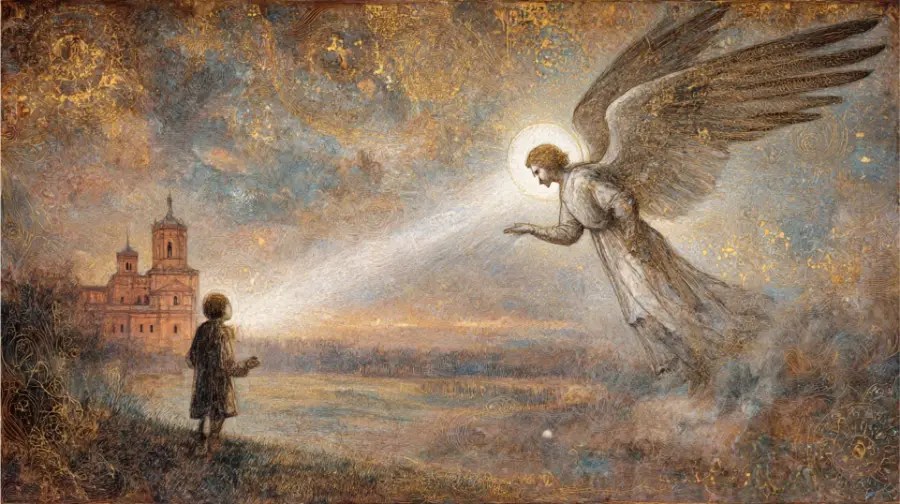
The Babylonian Talmud holds that Jabez was Othniel son of Kenaz, the first judge in the Book of Judges, whom God “raised up” as “a deliverer” (Judges 3:9). A teaching quoted in tractate Temurah (16a) says the two were one man. It explains the name Othniel as “God answered him,” and it reads the name Jabez as a play on Hebrew words meaning that he counseled Israel and spread the Torah among them. Othniel does appear in the same chapter of Chronicles, three verses on: “And the sons of Kenaz; Othniel, and Seraiah” (1 Chronicles 4:13). But Chronicles itself never connects the two men, so the identification is the rabbis’ interpretation rather than something the text says.
The Talmud reads the prayer in two ways. In the first, Jabez asks for a blessing in Torah study, for many students, for his learning not to be forgotten and for friends like himself. In the second, which it attributes to Rabbi Judah the Prince, he asks for children, for success in business and for freedom from illness. Both readings finish the “if” that the Hebrew leaves hanging: if God does not grant the prayer, Jabez says, he will go down to the grave in sorrow.
What is Bruce Wilkinson’s book The Prayer of Jabez?
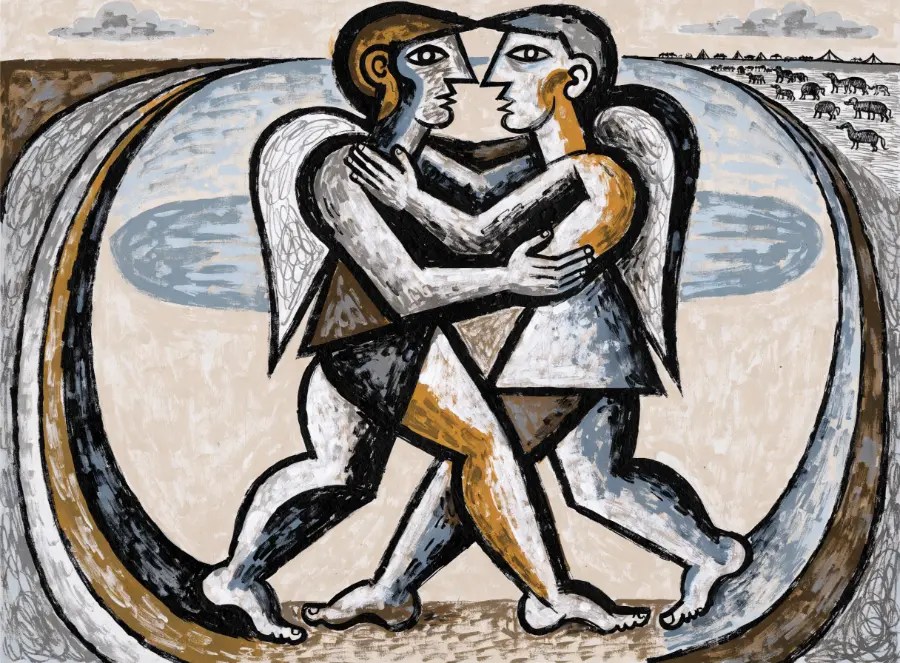
It was a small book that made the prayer famous. The Prayer of Jabez: Breaking Through to the Blessed Life, by Bruce Wilkinson, president of Walk Thru the Bible Ministries, was published by Multnomah in May 2000. In a 2001 address reported by Baptist Press, Wilkinson said he had preached on the prayer for 30 years and that the book began as his sermon in print, meant as a gift for the guests at the National Day of Prayer breakfast in Washington in 2000.
The publisher had expected to sell about 30,000 copies. By April 2002, Publishers Weekly reported, the book had sold 9.2 million copies in 17 languages and had spent 24 weeks at number one on the New York Times list for advice, how-to and miscellaneous books. After it came versions for women, teenagers and children, study guides, devotionals and merchandise.
Wilkinson urges readers to ask God boldly for blessing and for a larger “territory,” which he takes to mean more opportunity to serve God. In a companion workbook he wrote that the prayer is “not for my wishes, but His will,” and in the same 2001 address he complained that secular reporters asked him about money: “I’ve been preaching this for 30 years and nobody ever talked about money until it got to be a secular best-seller.”
Why was The Prayer of Jabez criticized?
When Phil Ryken, a minister of Tenth Presbyterian Church in Philadelphia, reviewed the book in May 2001, he gave Wilkinson credit for stressing spiritual rather than financial blessing and for discouraging people from praying mainly for money. What troubled him was that the book encourages Christians to pray more “selfishly,” promises answers in the form of miracles, and treats one prayer as a key that unlocks blessing.
Ryken quoted Wilkinson’s line, “If you didn’t ask Him for a blessing yesterday, you didn’t get all you were supposed to have,” and argued that by this reasoning a believer who forgets the prayer misses the blessings God intended. And he set the prayer of Jabez beside the Lord’s Prayer, whose requests are all made in the plural: give us, forgive us, deliver us.
Enter the Bible, the Luther Seminary study site, asks some of the same questions on a page about the book. Can God’s blessing be reduced to a formula for success? How does the book’s promise of abundant personal blessing sound beside the prayer Jesus taught, “Give us this day our daily bread” (Matthew 6:11)? Does the book leave room for suffering and for serving others? The page also asks how the “prosperity gospel,” the teaching that God rewards faith with material success, sounds to audiences in developing countries.
Can Christians pray the prayer of Jabez today?
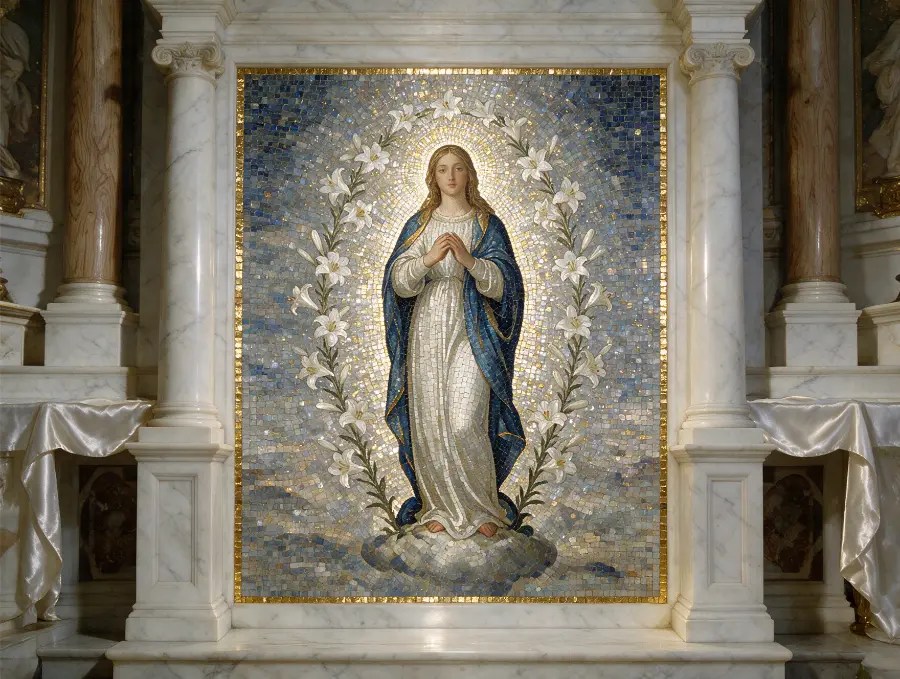
Yes, and even Ryken, for all his objections to the book, wrote that “all the prayers in the Bible–including the one that Jabez prayed–help set the agenda for our intercession.” Enter the Bible reads the passage as showing that God responds to prayer and invites people to pray as Jabez did. What Christians disagree about is what the prayer promises. 1 Chronicles 4:10 tells us that God granted one man’s request, and it does not say that God will answer everyone who repeats the same words in the same way.


Leave a Reply