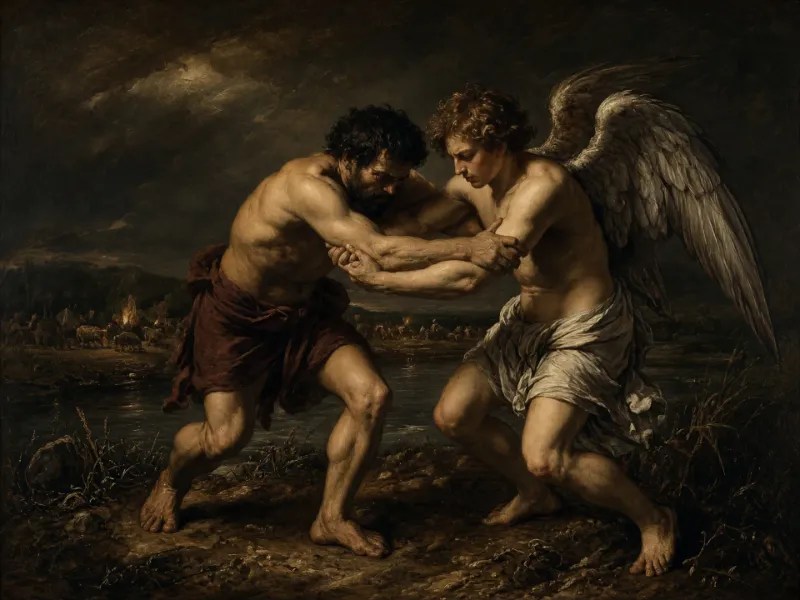
Bible Mysteries: Can Guardian Angels Fall For Humans?


  • Angels in Christian theology are spiritual beings created to serve God and assist in the divine plan of salvation. They do not experience romantic love as humans do, and their interactions with humans are primarily for spiritual guidance and protection.
  • The idea of romantic relationships between angels and humans is not supported by mainstream Christian theology. Such concepts often stem from misinterpretations of biblical passages or influence from non-canonical texts and cultural mythologies.
  • There’s a fundamental difference between how good angels and fallen angels relate to humans. Good angels respect human free will and guide towards God, while fallen angels may attempt to deceive and lead away from God.
  • Christians are encouraged to approach media depicting angel-human romances with critical discernment, recognizing these as fictional narratives that often diverge from biblical and theological truths. Such stories should be used as opportunities for reflection on faith and the nature of divine love, rather than as accurate representations of spiritual realities.

What does the Bible say about angels and their relationships with humans?

As we contemplate the nature of angels and their interactions with humanity as revealed in Sacred Scripture, we are invited to reflect on the powerful mystery of God’s creation and His divine plan for all beings, both celestial and terrestrial.

The Bible presents angels primarily as messengers and servants of God, created to carry out His will and to assist in the divine plan of salvation. In the book of Hebrews, we read that angels are “ministering spirits sent to serve those who will inherit salvation” (Hebrews 1:14). This passage reveals the fundamental relationship between angels and humans – one of service and guidance, rather than romantic or familial bonds.

Throughout Scripture, we see angels appearing to humans in crucial moments of salvation history. They announce the birth of Christ to the shepherds (Luke 2:9-14), minister to Jesus after His temptation in the wilderness (Matthew 4:11), and proclaim His resurrection to the women at the tomb (Matthew 28:5-7). In each of these instances, angels fulfill their role as messengers, bridging the gap between the divine and human realms.

While angels interact with humans, the Bible does not depict them as having the same emotional or physical experiences as humans. They are spiritual beings, created for a different purpose than humanity. As our Lord Jesus teaches, “At the resurrection people will neither marry nor be given in marriage; they will be like the angels in heaven” (Matthew 22:30). This passage suggests that angels do not experience romantic love or physical attraction in the way that humans do.

But we must not mistake this lack of romantic love for a lack of care or concern. The Psalms tell us that God “will command his angels concerning you to guard you in all your ways” (Psalm 91:11). This protective role implies a deep, albeit different, form of love – one rooted in obedience to God and concern for His beloved creation.

Psychologically we might understand the biblical portrayal of angels as representing the ideal of selfless love and service. Their interactions with humans model a form of relationship that transcends physical or emotional needs, focusing instead on spiritual guidance and protection.

Historically, we must remember that the concept of angels has evolved over time within the Judeo-Christian tradition. In the earliest biblical texts, angels are often indistinguishable from God Himself, as in the story of Abraham and the three visitors (Genesis 18). Later writings, particularly in the intertestamental period, developed a more complex angelology, with hierarchies and specific roles for different types of angels.

Can angels experience romantic love like humans do?

From a theological perspective, the traditional understanding within the Church has been that angels, as pure spiritual beings, do not experience romantic love in the same way that humans do. This view is rooted in the words of our Lord Jesus Christ, who taught that “at the resurrection people will neither marry nor be given in marriage; they will be like the angels in heaven” (Matthew 22:30). This passage suggests that the angels’ mode of existence is fundamentally different from our earthly experience of romantic relationships and marriage.

But we must be careful not to interpret this as meaning that angels are incapable of love. On the contrary, as beings created by God who is love itself, angels are understood to be filled with divine love. Their love, though, is typically seen as a pure, spiritual love directed primarily towards God and, by extension, towards God’s creation, including humanity.

We might consider that romantic love as we understand it is deeply intertwined with our human nature, including our physical bodies, emotions, and the need for companionship. Angels, being non-corporeal spirits, do not share these aspects of human psychology. Their “psychology,” if we can use such a term, would be fundamentally different from ours, oriented towards the contemplation and service of God rather than the fulfillment of emotional or physical needs.

Historically, the question of angelic love has been a subject of theological and philosophical debate. Some of the early Church Fathers, influenced by Neo-Platonic philosophy, speculated about the nature of angelic intelligence and love. For instance, Pseudo-Dionysius the Areopagite, in his work “The Celestial Hierarchy,” described a complex system of angelic orders, each participating in and transmitting divine love in different ways.

It is worth noting that in some strands of mystical theology, the love of angels has been used as a metaphor for the highest form of spiritual love. St. Bernard of Clairvaux, for example, in his sermons on the Song of Songs, uses the imagery of angelic love to describe the soul’s pure love for God. This suggests that while angels may not experience romantic love as we do, their mode of love might be seen as a higher, more perfect form of spiritual union.

At the same time, we must be cautious about projecting human concepts and experiences onto angelic beings. The Catechism of the Catholic Church reminds us that angels are “spiritual, non-corporeal beings” (CCC 328). As such, their mode of existence and experience is fundamentally different from ours.

Although we cannot definitively state that angels cannot experience romantic love, the weight of Scripture and tradition suggests that their experience of love is of a different nature than human romantic love. Their love is pure, spiritual, and directed primarily towards God. As we reflect on this, let us be inspired by the angelic example of total devotion to God, recognizing that all forms of authentic love, whether human or angelic, have their source in the infinite love of our Creator.

Are there any stories in Christian tradition about angels falling in love with humans?

The most prominent narrative that touches on this theme comes from an interpretation of Genesis 6:1-4, which speaks of the “sons of God” who saw that the “daughters of humans were beautiful, and they married any of them they chose.” Some early Jewish and Christian interpreters understood the “sons of God” to be angels, leading to stories of angels desiring and mating with human women.

This interpretation gained traction in some apocryphal texts, particularly the Book of Enoch, which elaborates on this idea. While not considered canonical by most Christian traditions, the Book of Enoch was influential in some early Christian circles. It tells of angels, called “Watchers,” who lusted after human women, came to Earth, and produced offspring with them. These offspring were said to be giants, known as the Nephilim.

But it’s crucial to note that this interpretation has been largely rejected by mainstream Christian theology. The Church Fathers, in their wisdom, generally interpreted the “sons of God” as referring to the righteous line of Seth rather than to angels. This understanding aligns more closely with the biblical portrayal of angels as spiritual beings without physical bodies.

Psychologically we might view these stories as symbolic representations of the human struggle with temptation and the consequences of giving in to forbidden desires. The idea of celestial beings being drawn to earthly pleasures can serve as a powerful metaphor for the tension between spiritual aspirations and worldly attractions.

Historically, we see similar themes in other cultures’ mythologies, suggesting a common human fascination with the idea of divine or semi-divine beings interacting romantically with humans. In Christian context, But these stories have generally been treated as cautionary tales rather than romantic ideals.

In more recent times, particularly in popular culture, the theme of angels falling in love with humans has been explored in various works of fiction. Although these modern retellings often romanticize the idea, they depart significantly from traditional Christian angelology.

In the mystical tradition of Christianity, we find a different kind of “love story” between angels and humans. Mystics like St. Teresa of Avila have described powerful spiritual experiences involving angels, but these are characterized by spiritual ecstasy and divine love rather than romantic or physical attraction. The famous sculpture by Bernini of Teresa’s vision of an angel piercing her heart with a golden spear is a powerful artistic representation of this type of spiritual encounter.

While stories of angels falling in love with humans may capture our imagination, they do not align with the Church’s understanding of angelic nature. Angels, in Christian theology, are seen as spiritual beings whose love is directed primarily towards God and whose interactions with humans are in service of God’s divine plan. Their example challenges us to elevate our own love, moving beyond mere physical attraction to a more spiritual, selfless form of love that reflects the divine love shown to us by our Creator.

What did the early Church Fathers teach about angels and their feelings toward humans?

For instance, St. Augustine, in his work “The City of God,” speaks of the angels as citizens of the heavenly city, whose love is directed primarily towards God. He writes, “The good angels, therefore, are not our friends in the same way as our fellow-citizens, but as blessed and immortal citizens of that heavenly city to which we hope to attain.” This perspective suggests that while angels may have a benevolent disposition towards humans, their “feelings” are of a different order than human emotions.

St. John Chrysostom, known as the “Golden-mouthed” for his eloquence, teaches that angels rejoice in human repentance and salvation. In his homilies, he often refers to Luke 15:10, where Jesus says, “There is joy in the presence of the angels of God over one sinner who repents.” This indicates that the early Fathers believed angels to have a deep concern for human spiritual welfare, albeit expressed in a manner distinct from human emotional patterns.

Psychologically we might interpret the Fathers’ teachings as presenting angels as models of perfect alignment with God’s will. Their “feelings” towards humans, then, would be an extension of their love for God and their desire to see His purposes fulfilled in human lives.

Historically, the early Church Fathers were often responding to various heresies and misconceptions about angels. For example, some Gnostic sects promoted the worship of angels, a practice strongly condemned by the Fathers. St. Paul’s warning in Colossians 2:18 against the “worship of angels” was frequently cited in these discussions.

The Cappadocian Fathers – St. Basil the Great, St. Gregory of Nyssa, and St. Gregory of Nazianzus – further developed the Church’s understanding of angels. They emphasized the angels’ role in the divine economy of salvation, seeing them as cooperators with God in guiding humanity towards redemption. This cooperation implies a form of care for humans, but one that is always subservient to and in harmony with God’s will.

Pseudo-Dionysius the Areopagite, in his influential work “The Celestial Hierarchy,” presents a complex system of angelic orders, each with specific roles in transmitting divine illumination. While this work speculates on the nature of angelic intelligence and love, it maintains the fundamental otherness of angelic existence compared to human experience.

Some of the early Fathers, particularly those influenced by Neo-Platonic philosophy, sometimes used the love of angels as a metaphor for the highest form of spiritual love. But this was typically understood as an analogy to help humans grasp divine realities, rather than a literal description of angelic emotions.

How do angels’ spiritual nature and humans’ physical nature affect the possibility of love between them?

We must recognize the fundamental difference in the nature of angels and humans as revealed in Scripture and expounded upon by the Church Fathers. Angels, as pure spiritual beings, exist in a state that transcends the physical limitations of time and space. Humans, on the other hand, are created as a unity of body and soul, our spiritual nature inextricably linked with our physical existence in this temporal world.

This ontological difference has major implications for the possibility of love between angels and humans. The love that we as humans experience, particularly romantic love, is deeply intertwined with our physical nature. It involves not only spiritual and emotional connections but also physical attraction and the potential for procreation. Angels, being non-corporeal, do not share these aspects of human existence.

Psychologically we might consider how much of human love is shaped by our embodied experience – our senses, our hormones, our need for physical touch and comfort. These elements, which play a crucial role in human relationships, are absent in angelic existence. The “psychology” of an angel, if we can use such a term, would be fundamentally different from human psychology, oriented towards the contemplation and service of God rather than the fulfillment of emotional or physical needs.

But this does not mean that love between angels and humans is impossible – rather, it suggests that such love would be of a fundamentally different nature than what we typically understand as love between humans. The love of an angel for a human would likely be more akin to the pure, spiritual love that the saints speak of in their mystical experiences – a love that is entirely focused on the spiritual welfare of the beloved and their relationship with God.

Historically, we see this concept reflected in the writings of mystics and spiritual teachers. St. Teresa of Avila, for instance, describes encounters with angels that are characterized by spiritual ecstasy and divine love, rather than any form of romantic or physical attraction. These accounts suggest a form of love that transcends physical boundaries and is rooted in shared devotion to God.

It’s also worth considering the purpose of love in the divine plan. For humans, love – including romantic love – serves multiple purposes: it brings us joy, teaches us selflessness, and participates in God’s creative work through the possibility of procreation. The love of an angel for a human, being unable to fulfill these physical aspects, would necessarily be directed towards spiritual ends – the sanctification of the human soul and its drawing closer to God.

In the Christian tradition, we often speak of guardian angels – spiritual beings assigned to guide and protect individual humans. This concept suggests a form of love that is protective, guiding, and entirely focused on the spiritual good of the human. It’s a love that mirrors God’s love for us – unconditional, selfless, and aimed at our ultimate good.

Although the spiritual nature of angels and the physical nature of humans create a fundamental barrier to the kind of love we experience between humans, it does not preclude all forms of love. Rather, it points us towards a higher, purer form of love – one that is entirely spiritual in nature, focused on the beloved’s ultimate good, and rooted in shared love for God. As we contemplate this, let us be inspired to purify our own love, striving to reflect more fully the selfless, spiritual love that characterizes the angelic hosts.

What are the dangers or consequences of humans becoming romantically involved with angels?

We must remember that angels, as spiritual beings, exist on a different plane of reality from us corporeal humans. The Catechism of the Catholic Church reminds us that angels are “purely spiritual creatures” (CCC 328). This fundamental difference in nature creates an unbridgeable gap that makes true romantic love, as we understand it between humans, impossible.

Psychologically the desire for such a relationship may stem from a longing for the transcendent or a wish to escape the complexities and imperfections of human relationships. But this yearning, if indulged, can lead to a dangerous detachment from reality and neglect of genuine human connections that are essential for our emotional and spiritual growth.

The pursuit of angelic romance could be seen as a form of idolatry, placing created beings above the Creator in our hearts and minds. As Saint Augustine wisely cautioned, our hearts are restless until they rest in God alone. Seeking fulfillment in imagined relationships with angels diverts us from the true source of love and meaning.

There are also potential spiritual dangers to consider. Although we know that God’s angels are messengers of His love and protection, we must not forget the reality of fallen angels. The Scriptures warn us that even Satan can disguise himself as an angel of light (2 Corinthians 11:14). Those who open themselves to spiritual entities, believing them to be benevolent angels, may unwittingly expose themselves to deception and spiritual harm.

Historically, we see cautionary tales in various mystical traditions where individuals claimed special relationships with angels, sometimes leading to heretical beliefs or the formation of cults. These examples remind us of the importance of grounding our spiritual experiences in the teachings of the Church and the guidance of wise spiritual directors.

From a practical standpoint, fixation on angelic romance can lead to neglect of real-world responsibilities and relationships. It may cause individuals to withdraw from family, friends, and community, seeking instead an impossible union with a spiritual being.

Psychologically, such beliefs can be symptomatic of underlying mental health issues, such as delusional disorders or escapism from trauma or difficult life circumstances. In these cases, professional psychological help may be necessary alongside spiritual guidance.

I urge you to channel your longing for divine love into a deeper relationship with God and more authentic connections with your fellow humans. Remember, it is through loving one another that we most truly reflect the angelic virtues of compassion, service, and devotion to God.

How does God view the idea of angels and humans falling in love?

We must remember that God’s love is the foundation of all creation. As the First Letter of John beautifully proclaims, “God is love” (1 John 4:8). This divine love is perfect, encompassing, and beyond our full comprehension. It is within this context of God’s all-encompassing love that we must consider the relationships between His creatures.

The Book of Genesis tells us that God created humans in His own image and likeness (Genesis 1:27). This unique status gives humanity a special place in creation, distinct from the angels. Angels, as purely spiritual beings, serve as messengers and ministers of God’s will. Their purpose is to glorify God and to assist in the divine plan of salvation.

From this perspective, we can infer that God’s design for love and relationships differs for angels and humans. For humans, God instituted marriage as a sacramental bond between man and woman, a reflection of Christ’s love for the Church (Ephesians 5:31-32). This human love, in its ideal form, is meant to be a participation in divine love, fruitful and life-giving.

Angels, on the other hand, do not marry or procreate (Matthew 22:30). Their love is directed entirely towards God and, by extension, towards God’s creation. It is a pure, spiritual love, free from the physical and emotional complexities of human romantic love.

Given these fundamental differences, it seems unlikely that God would view romantic love between angels and humans as part of His divine plan. Such a union would blur the distinct natures and purposes He has given to each of His creatures.

The idea of human-angel romance could be seen as a projection of our human desires and limitations onto spiritual beings. As humans, we often struggle to comprehend love that is not romantic or familial. Yet, God’s love, and by extension, angelic love, transcends these categories.

Historically, we see that when humans have claimed special romantic relationships with spiritual beings, it has often led to confusion, heresy, or exploitation. The Church has consistently taught against such notions, emphasizing instead the proper roles of angels as guardians and messengers.

God’s view of love between His creatures is always rooted in what is best for their spiritual growth and ultimate salvation. A romantic relationship between a human and an angel would likely hinder rather than help this goal, potentially distracting both from their true purposes.

Instead, we are called to marvel at the different ways love manifests in God’s creation. We can appreciate the steadfast, spiritual love of the angels while embracing the complex, embodied love we experience as humans. Both forms of love, when properly directed, lead us closer to God.

I encourage you to seek God’s love first and foremost. It is in deepening our relationship with the Divine that we come to understand true love in all its forms. Let us be inspired by the angels’ single-hearted devotion to God, while fully embracing our human capacity for love in all its richness and complexity.

Remember, that in the end, all love flows from and returns to God. Our ultimate fulfillment lies not in imagined relationships with celestial beings, but in the perfect union with our Creator that awaits us in the heavenly kingdom.

Are there differences between how good angels and fallen angels might relate to humans?

Good angels, as faithful servants of God, relate to humans in ways that align with divine love and purpose. The Catechism of the Catholic Church teaches us that angels are “spiritual, non-corporeal beings” who “have intelligence and will: they are personal and immortal creatures” (CCC 328, 330). Their interactions with humans are characterized by guidance, protection, and the facilitation of God’s will.

Psychologically, the presence of good angels in our lives can be understood as a source of comfort, inspiration, and moral support. They do not seek to dominate or control human will, but rather to illuminate the path towards God. As the Psalmist writes, “For he will command his angels concerning you to guard you in all your ways” (Psalm 91:11). This guardianship respects human free will while offering divine assistance.

Fallen angels, on the other hand, having rejected God’s love and authority, relate to humans in ways that are fundamentally destructive. The Scriptures warn us that “our struggle is not against flesh and blood, but against the rulers, against the authorities, against the powers of this dark world and against the spiritual forces of evil in the heavenly realms” (Ephesians 6:12). These fallen beings, led by Satan, seek to mislead, tempt, and ultimately separate humans from God’s love.

Psychologically the influence of fallen angels can manifest as destructive thoughts, addictive behaviors, or a distorted sense of reality. Unlike good angels who respect human autonomy, fallen angels may attempt to exploit human vulnerabilities and weaknesses.

Historically, we see this contrast played out in numerous biblical accounts. Good angels, like Gabriel, bring messages of hope and divine purpose, as in the Annunciation to Mary (Luke 1:26-38). Fallen angels, exemplified by Satan in the book of Job, seek to test and undermine human faith and integrity.

It is crucial to understand that while good angels may form close spiritual bonds with humans, these relationships are always in service of bringing the individual closer to God. As St. Thomas Aquinas taught, angels cannot read human thoughts or control human will directly. Their influence is subtle, respectful, and always aligned with divine will.

Fallen angels, conversely, may attempt to form what appear to be close relationships with humans, but these are ultimately deceptive and self-serving. They may present themselves as beings of light or even as good angels to gain trust and influence. This is why St. Paul warns us to “test the spirits to see whether they are from God” (1 John 4:1).

In our modern context, where interest in the supernatural often blends with popular culture and new age spirituality, it is more important than ever to maintain this clear distinction. Good angels will never encourage behaviors or beliefs that contradict God’s revealed truth or the teachings of the Church. They inspire virtue, selflessness, and a deeper connection to God and community.

Fallen angels, in contrast, may encourage self-centeredness, moral relativism, or a sense of spiritual superiority that separates individuals from the body of Christ. They may promise secret knowledge or special status, echoing the temptation in the Garden of Eden.

I urge you to cultivate a relationship with God that allows you to discern these spiritual influences wisely. Regular prayer, participation in the sacraments, and a grounding in Scripture and Church teachings are our best defenses against deception.

What do modern Christian leaders and scholars say about this topic?

Many modern Christian thinkers approach this subject with caution, emphasizing the need to interpret angelic encounters within the framework of orthodox theology. The late Pope Benedict XVI, in his work “Angels,” stressed that angels are spiritual beings whose primary function is to serve God and assist in the divine plan of salvation. He cautioned against an overly sentimental or romanticized view of angels, reminding us that their purpose is to direct our attention towards God, not towards themselves.

Psychologically some Christian scholars interpret the fascination with angel-human relationships as a manifestation of our deep-seated longing for the transcendent. Dr. Paul C. Vitz, a Catholic psychologist, suggests that such ideas may reflect a desire to bridge the gap between the physical and spiritual realms, but warns that this can lead to a distorted understanding of both human and divine love if not properly grounded in sound theology.

Evangelical scholar Michael S. Heiser, in his work on the supernatural realm, emphasizes the clear biblical distinctions between humans and angels. He argues that while angels can interact with humans, the nature of these interactions is fundamentally different from human-to-human relationships. Heiser cautions against blurring these lines, as it can lead to theological confusion and potentially dangerous spiritual practices.

Catholic theologian Dr. Scott Hahn, known for his work on covenant theology, places the question of angel-human relationships within the broader context of God’s family. He reminds us that through Christ, we are adopted into God’s family in a way that even angels are not. This unique status should inform how we understand our relationship with both God and His angelic creatures.

Some Pentecostal and Charismatic leaders, while affirming the reality and importance of angelic ministry, are careful to discourage any notion of romantic or sexual relationships between angels and humans. They often cite the warnings in Scripture against the “sons of God” intermingling with humans (Genesis 6:1-4) as a caution against blurring these spiritual boundaries.

From a historical-theological perspective, scholars like Alister McGrath remind us that the Church has consistently rejected ideas of intimate angel-human relationships as a form of neo-gnosticism. Such beliefs, they argue, detract from the centrality of Christ in the divine plan and can lead to a devaluation of human embodiment.

It is worth noting that Although there is a general consensus among mainstream Christian leaders against the idea of romantic angel-human relationships, there is a growing body of popular literature and media that explores these themes. Many Christian scholars view this trend with concern, seeing it as a potential gateway to syncretism and a dilution of authentic Christian spirituality.

I urge you to approach these modern discussions with discernment and a firm grounding in the teachings of the Church. Although we can appreciate the beauty and mystery of God’s angelic creation, we must remember that our ultimate calling is to a relationship with God Himself, mediated through Christ and supported by the communion of saints – both heavenly and earthly.

How should Christians approach stories or media that depict angel-human romances?

In our modern world, we are often confronted with various forms of media that present imaginative and sometimes provocative depictions of spiritual realities. The portrayal of romantic relationships between angels and humans in literature, film, and other media has become increasingly common. As Christians, we must approach such content with discernment, wisdom, and a firm grounding in our faith.

We must remember that these stories are works of fiction, often drawing more from human imagination and cultural mythology than from biblical or theological truths. While they may be entertaining or thought-provoking, they should not be seen as accurate representations of spiritual realities. As the Catechism reminds us, “The witness of Scripture is as clear as the unanimity of Tradition” regarding the nature of angels as spiritual beings (CCC 328).

Psychologically the appeal of these stories often lies in their exploration of themes such as forbidden love, the transcendence of human limitations, and the desire for connection with the divine. Dr. Paul Vitz, a Catholic psychologist, suggests that such narratives may reflect a deep-seated human longing for the transcendent, but cautions that this longing should ultimately direct us towards God, not towards imagined relationships with created beings.

As we engage with these media, it is crucial to maintain a critical distance and to use them as opportunities for reflection on our faith. We might ask ourselves: How does this portrayal align with or differ from Christian teaching? What does it reveal about our culture’s understanding of love, spirituality, and the divine? How might it influence our own perceptions of these important concepts?

Historically, the Church has always encouraged the faithful to be discerning consumers of culture. Saint John Paul II, in his Letter to Artists, recognized the power of art to “give expression to the infinite beauty of God and to raise people’s minds to him.” But he also emphasized the responsibility of artists to create works that uplift the human spirit and reflect truth.

When approaching stories of angel-human romances, we should be particularly mindful of the potential for these narratives to distort our understanding of divine love and human relationships. They may inadvertently promote a view of love that is overly focused on the extraordinary or supernatural, potentially devaluing the sacred beauty of human love as God designed it.

Such stories might lead some to seek spiritual experiences or relationships outside the bounds of orthodox Christian practice. I must caution against any attempts to contact or commune with angels outside of the Church’s established spiritual practices. Our faith provides us with rich and meaningful ways to experience God’s love and the support of the heavenly host without resorting to potentially dangerous spiritual experimentations.

At the same time, we should not be overly fearful or dismissive of these cultural products. They can serve as starting points for meaningful discussions about faith, love, and the nature of spiritual reality. Parents and educators might use these stories as opportunities to teach young people about the true nature of angels as described in Scripture and Church tradition.

For adult Christians, engaging critically with these media can be an exercise in spiritual and intellectual growth. By comparing fictional portrayals with biblical and theological truths, we can deepen our understanding of our faith and sharpen our ability to discern truth from cultural constructs.

Discover more from Christian Pure

Subscribe now to keep reading and get access to the full archive.

Continue reading

Share to...